A BEGINNER’S GUIDE TO THE CHINESE ZODIAC
The 12 Animal Signs are Rat, Ox, Tiger, Rabbit, Dragon, Snake, Horse, Goat, Monkey, Rooster, Dog and Pig. Often called the Chinese zodiac animals, they form a repeating cycle. In BaZi, these animal names are the familiar labels for the 12 Earthly Branches, which appear in a chart calculated from your birth details.
You may already know the animal associated with your birth year. Perhaps you have heard it mentioned at a family gathering, seen it on a calendar, or looked it up before Chinese New Year.
Then someone born in the same animal year comes to mind. Their work, relationships and way of handling decisions seem very different from yours.
How much can the animal you share actually explain?
That is a useful question to begin with. Before reading a forecast, it helps to understand what the animal names refer to and how we use them.
01 / THE BASICS
The Chinese zodiac animals follow this sequence:
After Pig, the sequence returns to Rat. In the familiar birth-year cycle, the same animal comes around every 12 years.
Knowing the order helps you recognise the signs when you see them in an article, calendar or forecast. You can learn the sequence gradually. Understanding how the signs are used matters more than memorising the list in one sitting.
02 / THE BASICS
In Chinese Astrology, the animal names give us a familiar way to recognise the Earthly Branches. These Branches are used to mark time and appear within a BaZi chart.
Think about how a month name helps you place something in a calendar. An animal sign also belongs to a system for identifying time. The name is a reference you can recognise before learning the more detailed terminology.
This is why we begin with what a sign refers to. Reading the word “Tiger” does not establish that someone must behave like a tiger. Recognising an animal name is the first step towards understanding the information behind it.
03 / THE BASICS
Your birth-year animal is the sign most people mean when they ask, “What animal are you?”
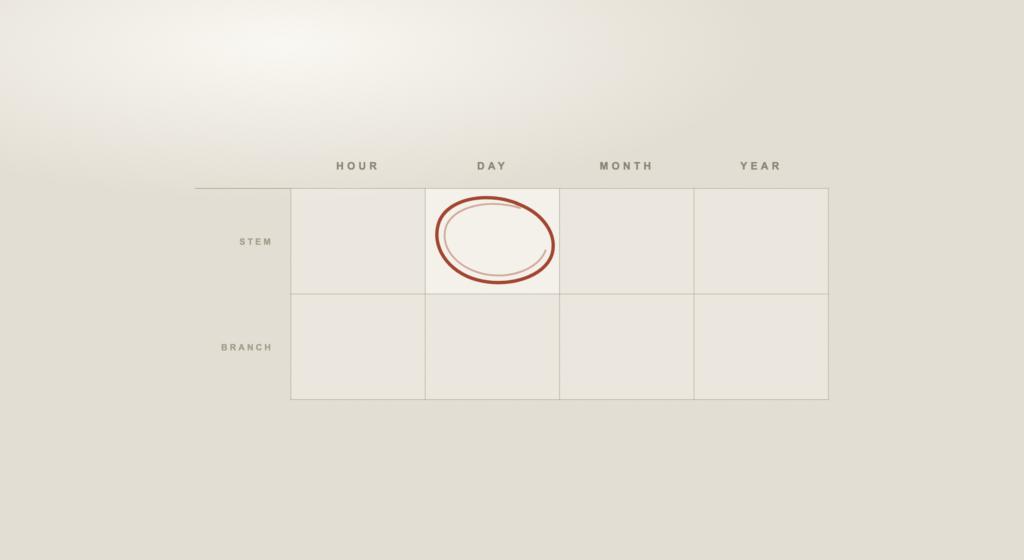
A BaZi chart has four pillars based on the year, month, day and hour of birth. Each pillar contains a Heavenly Stem and an Earthly Branch. The Earthly Branch is associated with one of the 12 animal signs. A sign can appear in more than one pillar, so four positions do not necessarily mean four different animals.
For a beginner, the useful point is that the animal associated with your birth year is one part of a larger chart. Two people can share that sign while having different signs in the other positions.
We explain the wider structure in our introduction to BaZi and the Four Pillars. For now, you can keep learning the basics without calculating your own chart.
04 / THE BASICS
A birth-year reference is a common place to start. The important detail is when the BaZi year changes.
BaZi uses the Chinese solar calendar. Its year boundary is tied to Li Chun, the Start of Spring, in early February, rather than 1 January or the Chinese New Year holiday.
If you were born close to that boundary, check the exact transition carefully before deciding which birth-year animal applies. A table that lists only a Gregorian year may leave out this distinction.
You can understand the animal signs before working through those calculations. Learning the names and the calendar distinction gives you a useful foundation for the next step.
05 / THE BASICS
An annual animal-sign forecast introduces themes associated with a particular year. In our teaching, we use that information to consider opportunities, challenges and how to respond to them.
Suppose you read a theme about working with other people. You could use it to reflect on a collaboration already taking shape: what you hope to contribute, what needs discussing, and what preparation remains. That is an example of bringing a forecast into a real decision, rather than an interpretation for any particular sign.
The starting habit is simple: understand what the forecast is saying, then consider where it connects with your circumstances. A broad annual outlook still needs context before you apply it to your own life.
06 / THE BASICS
Begin with three things: recognise the 12 animals, understand that they refer to time, and remember that your birth-year animal belongs to a wider chart.
Those ideas give you something to build on when you encounter your month, day and hour signs or begin reading an annual outlook. Each new explanation has a place in the picture.
You can become familiar with the language first, then explore how a particular year’s themes are interpreted.
Want to follow along? Subscribe to the Joey Yap newsletter for updates on new articles, upcoming training and programmes, plus free resources from time to time.
No prior knowledge is needed.
Get Joey Yap’s latest insights and updates straight to your inbox.
Article, Feng Shui
Flying Star Feng Shui calculates a chart for a building from its direction and period. Here is what Period 9

Article, BaZi, Channelling Kongming
A Rob Wealth year is usually read as a threat to defend against. Read more carefully, the warning inside it
Article, BaZi
Your Day Master is the one character in a BaZi chart that represents you, out of ten possible types. Here
Article
The Tong Shu is the Chinese almanac used to select auspicious dates. It scores every day by its Day Officer,