Eleven weeks.
That is how long a founder I once advised sat on a launch that was, by every practical measure, ready. The product worked. The funding had cleared months earlier. Her advisors, for once, all agreed on something. She spent those eleven weeks running the same numbers every Monday morning, waiting to feel a certainty that was never going to arrive on its own.
When I finally asked her what she was waiting for, she said she wanted to know if this was “the right time.” Said that way, it sounds like she was asking a question. Listened to more closely, it was a request. She wanted someone, or something, to hand her permission from outside herself, so that if the launch failed, the timing could carry some of the blame instead of the decision.
I understood the impulse. Most executives are taught to treat timing as weather: something that happens to you, that you can forecast but never touch. You wait for the market to be ready, for the board to be aligned, for the quarter to close cleanly, and you call this patience. Often it is something else wearing patience’s clothing.
QiMen Dun Jia, the classical Chinese system for reading how time, direction and circumstance combine at a given moment, starts from a different premise entirely. It treats timing as terrain: something with structure, that can be read, and that changes depending on where you stand within it. A launch in one week carries a different configuration of support and resistance than the same launch three weeks later. The pattern of the moment has shifted. Nothing about fate has moved at all. Learn to read that pattern, and timing stops being something you wait on. It becomes something you work with.
I have sat across the table from two people building nearly identical companies, with nearly identical products, twelve months apart. Same category. Same funding size. Same competitive landscape. One launched into a period that QiMen would describe as carrying strong support for new initiatives and visibility. The other launched into a period configured for consolidation and internal repair, better suited to fixing a business than announcing one.
The first founder is still operating. The second is not, though her product was, if anything, the better one.
I want to be careful with this example, because it would be easy to hear it as fatalism, as though the second founder was written off before she began. That is precisely the misreading QiMen is built to correct. A different sequence existed for her all along: the same product, held for eight more weeks, aimed at a different set of early customers, moving with the period rather than against it. She read the moment the way most executives do, by instinct, momentum and the calendar quarter, rather than by the actual structure of the time she was standing in, and that reading, more than any fixed fate, is what cost her the window.
This is the distinction I want every serious business reader to sit with. Talent tells you what to build. Timing tells you when and how to move it. Most organisations invest enormous resources sharpening the first and almost none understanding the second.
Here is what nearly three decades of advising decision-makers across industries has shown me. The decisions that determine whether a business thrives are rarely single decisions. They are sequences: launch, then hire, then raise, then expand, each one landing on top of the last. Get the sequence right and each step reinforces the next. Get it wrong, and even correct individual decisions cancel each other out, because they were never designed to be read together.
QiMen is, at its core, a sequencing discipline. Read correctly, it locates where, in the order of decisions ahead of a leader, a particular move sits most naturally: whether now is a moment for outward action, launching, hiring, announcing, or a moment better suited to internal consolidation, refining, restructuring, preparing. The judgement of whether the underlying idea itself is sound belongs to the leader and the market, always. Confuse the sequencing, launch when the period favours consolidation, or sit quietly when the period favours visibility, and even the best-built strategy will feel like it is swimming against a current nobody told you was there.
This is why I say to the executives I work with that they should stop reading their destiny and start directing it. A forecast that only tells you what is coming is a passive instrument. A sequencing framework that tells you where you are standing, and what kind of move that ground currently supports, is an active one. The difference between those two postures is the difference between a leader who reacts to timing and a leader who uses it.
State it plainly. Talent determines the ceiling of what a business can become. Timing determines whether it gets the chance to reach that ceiling at all. Two founders with equal talent, aimed at equal markets, can produce entirely different outcomes purely on the basis of sequence, because a good decision executed at the wrong point in a cycle behaves like a good decision executed badly.
This should change how you evaluate your own hesitation the next time you find yourself circling a decision without acting on it. The question worth asking is rarely “am I sure enough yet.” Certainty of that kind is not built to arrive early, and waiting for it is usually just delay wearing a more respectable name. The sharper question is structural: what does this particular window actually support, and does the move I am considering match it.
If you are weighing a launch, a hire, or an exit in the second half of this year, resist the instinct to answer that question by feel alone. Feel is shaped by fatigue, by board pressure, by whatever the last conversation in the room happened to be. Read the actual structure of the period you are standing in instead, and sequence your move to match it rather than to match your calendar.
I have built a career on the conviction that the world is not random. It is patterned, and the pattern can be read before you commit, rather than only pieced together afterwards once the outcome is known. That reading leaves the work of building a good business exactly where it belongs, in your hands. What it removes is the far more expensive habit of building a good business and launching it into the wrong week.
Ten times zero is zero. The clearest read of the moment is worth nothing until it changes what you do next quarter. Know the pattern, then move with it.
P.S. The chart I have described here belongs to the moment. There is a companion question I get asked almost as often, which is what a person’s own ten-year cycle, not just the calendar’s, has to say about the scale of move they should be making right now. That is a piece for another week.
Get Joey Yap’s latest insights and updates straight to your inbox.
Article, Feng Shui
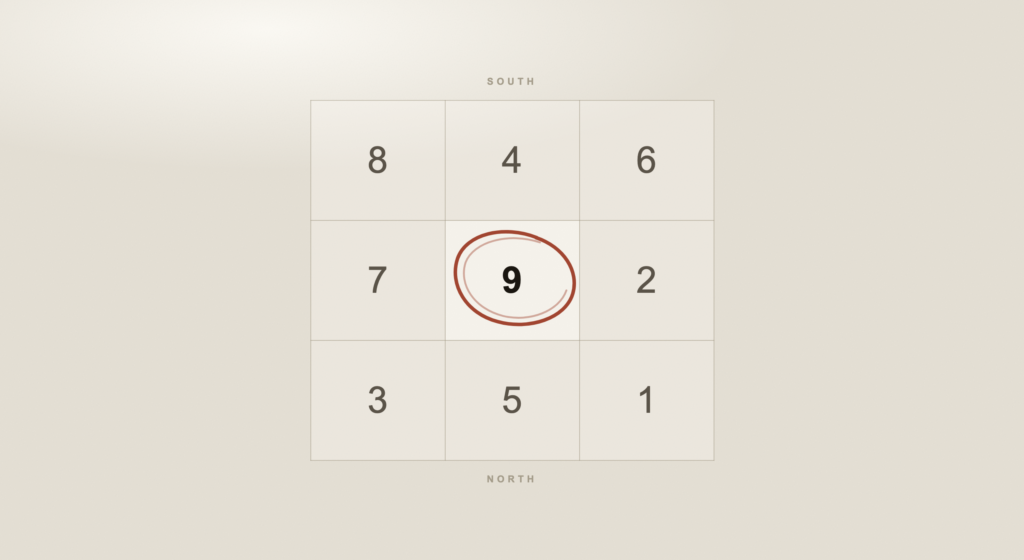
Flying Star Feng Shui calculates a chart for a building from its direction and period. Here is what Period 9
Article, BaZi, Channelling Kongming
A Rob Wealth year is usually read as a threat to defend against. Read more carefully, the warning inside it
Article, BaZi
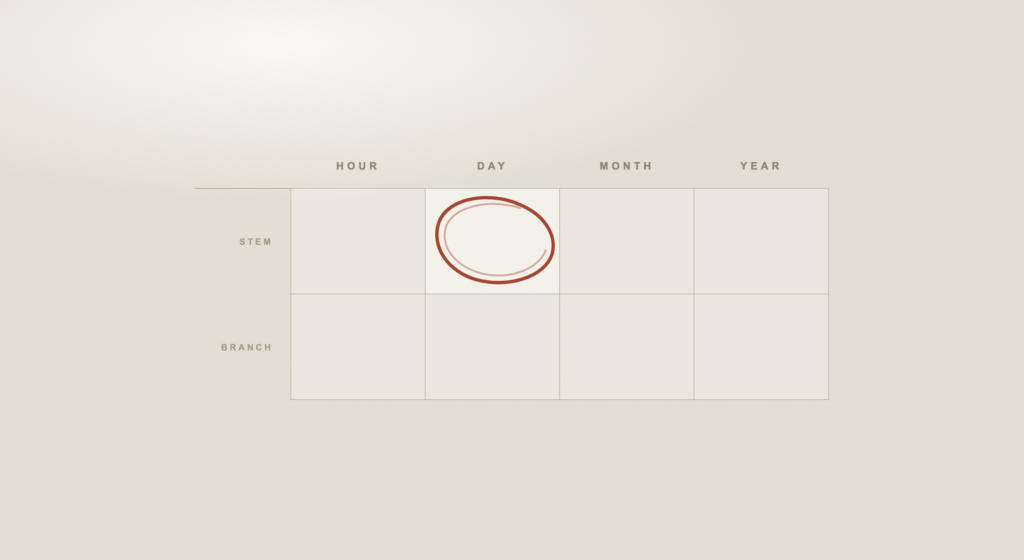
Your Day Master is the one character in a BaZi chart that represents you, out of ten possible types. Here
Article
The Tong Shu is the Chinese almanac used to select auspicious dates. It scores every day by its Day Officer,