The first time anyone ever paid me for a Feng Shui consultation, it was in Perth. The fee was one dollar. I am not joking, and the story behind it is one I will keep for another day. What matters is that it happened here, in this quiet city at the far edge of Australia, and so Perth will always be the place where my whole working life began.
I spent a few years here as a student. I loved it. I can still name, to this day, every Chinese restaurant I used to eat at, the good ones and the cheap ones and the one I went to when I had no money at all. And I can still picture the coffee shops where I would sit for hours, supposedly between classes, reading my Feng Shui texts and quietly meeting my first few clients. If I am honest, I spent rather more time in those coffee shops studying the things I cared about than I ever spent in the lecture halls. Perth forgave me for that. The city was patient with a young man who had not yet worked out what he was becoming.
I want to tell you about Perth the way I see it now, because the truth is that back then I could not read it at all. I lived in it. I crossed its river every day. And I saw almost none of what was in front of me.
Perth is often called the most isolated major city on earth, and once you have been there you understand why. It sits alone on the western shoulder of Australia, with thousands of kilometres of land behind it and the whole Indian Ocean in front. Captain James Stirling founded it in 1829, which by the measure of the old cities I usually read makes it astonishingly young. A city that was open paddock and riverbank within living memory of a few generations.
As a student I thought of that isolation as a kind of smallness. I was wrong. To a reader of land, a young and remote city is a rare and beautiful thing. There is so little piled on top of the landscape that you can still see its bones. The river, the hill, the plain, the scarp, the sea, all of it sits plainly in view, uncluttered by twenty centuries of building over and building again. Perth lets you see the raw grammar of a place. I simply did not know how to look.
The Swan River was the thing I crossed without thinking, day after day, for years. It is also the single most important thing about Perth, and the heart of why the city sits exactly where it does.
Most rivers hurry. They cut a line to the sea and they take their energy with them. The Swan does something I have rarely seen so clearly anywhere else. As it reaches the city, it slows, and it spreads, and it widens into a great calm sheet of water that the locals know as Perth Water, a broad shining basin held right in front of the town before the river pinches at the Narrows and opens out once more into Melville Water beyond. The river arrives at Perth and, in effect, pauses to rest.
In our practice this is the most fortunate water there is. Fast water scatters. Still, gathered water collects and holds, and where water gathers and is held, wealth gathers and is held with it. Perth did not choose a spot beside a river. Perth chose the one spot where its river chose to pool. That is why the most treasured addresses in the whole city line that held water, the riverside suburbs of Dalkeith and Nedlands, of Peppermint Grove and Mosman Park, of Applecross and South Perth looking back across the basin at the skyline. The money settled along the water that rests. It always does.
There is something else here that moved me when I finally understood it. The Noongar people, the traditional owners of this land, tell that the Swan was shaped by the Waugal, a great serpent of the Dreaming who moved across the country and carved out the rivers and the lakes. A Feng Shui master arriving from the other side of the world recognises that instinct at once. We too read the moving life of a landscape as a great serpent, a dragon, the living line that gives a place its breath. Two traditions, born oceans apart, looking at the same river and seeing the same creature in it. I find that quietly wonderful.
Stand on the held water and look toward the city, and you will see the rest of the form fall into place. Behind the town rises Kings Park, perched on the green height of Mount Eliza, one of the largest city parks in the world, looking down over the river and the skyline. Further east, beyond the flat coastal plain, runs the long low wall of the Darling Scarp, the ancient escarpment that edges the whole city. High green ground at the back. Gathered water in front. This is the armchair every master hopes a city will sit in, and Perth, almost by accident of where its settlers planted themselves, sits squarely within it.
And then there is the part of Perth’s fortune that no other city I read makes quite so literal. In most places, when we say the mountain is the source of wealth, we mean it as an image. In Perth you can mean it plainly. This city’s prosperity has come, again and again, straight up out of the earth. First the gold of the goldfields inland, then in our own time the iron and the great mining booms that turned a remote outpost into one of the wealthiest cities in the country. The land behind Perth has literally handed up its riches. The mountain as the giver of wealth is not a metaphor here. It is the city’s whole history.
I had all of this in front of me when I was twenty something years old, sitting in those coffee shops with my books. The river that rested. The hill at the back. The wealth waiting in the ground. And I could not read a word of it.
That is the honest lesson Perth gave me, and it is the one I am most grateful for. Feng Shui is not a set of formulas you memorise and then apply like a stamp. The formulas are only the alphabet. Learning to actually read a landscape, to stand on a riverbank and feel why a city grew where it grew, took me years and many more cities than this one. Perth is where I was handed the alphabet. It took the rest of my life so far to learn to read the sentences.
So when I picture Perth now, I do not picture a place I have outgrown. I picture the patient city that let me begin, badly, before I knew anything, and waited for me to come back one day with eyes that could finally see it. A great deal has changed in me since that one dollar consultation. The river has not changed at all. It is still resting there in front of the city, holding its fortune the way it always has, exactly as it did on the mornings I walked past it and understood nothing.
Some debts you can only repay by going back.
Article, Feng Shui
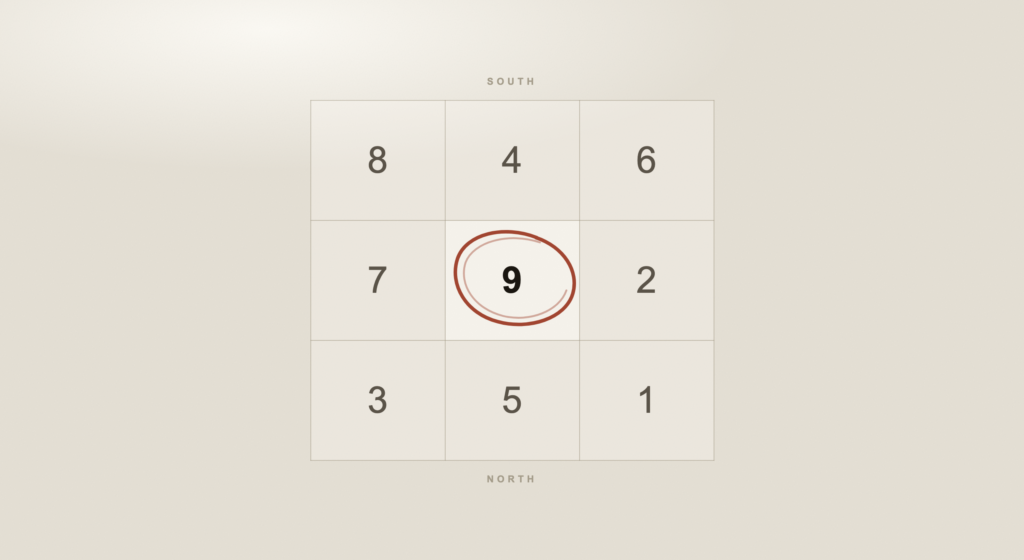
Flying Star Feng Shui calculates a chart for a building from its direction and period. Here is what Period 9
Article, BaZi, Channelling Kongming
A Rob Wealth year is usually read as a threat to defend against. Read more carefully, the warning inside it
Article, BaZi
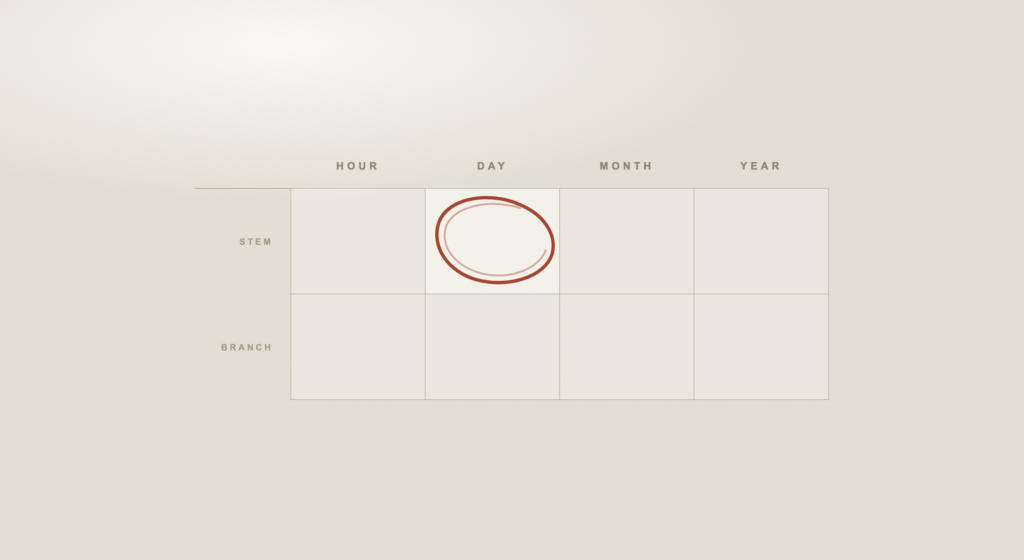
Your Day Master is the one character in a BaZi chart that represents you, out of ten possible types. Here
Article
The Tong Shu is the Chinese almanac used to select auspicious dates. It scores every day by its Day Officer,