Ask me for the best roast duck I have ever eaten and you will expect a name from Hong Kong, or Kuala Lumpur, or Taipei. It is in London. I found it years ago on one of my visits, and it has become one of a hundred small reasons I keep coming back.
I come for the duck and the musicals, for the old streets of Kensington and the cafes tucked along them, and I will even confess a quiet fondness for the London weather. But there is a deeper reason I keep returning, and it has nothing to do with pleasure. In close to thirty years of reading cities, London is the hardest one I have ever had to read. And difficulty, to a man who does this for a living, is its own strange joy.
Every other city asks me a single question. Where. Where does the land rise, where does the water gather, where does the fortune sit. London asks me that question too. Then it asks me a second one that almost no other city dares to ask. When.
In our practice, a building is not a neutral box. It holds the energy of the moment it came into the world. We divide time into periods of roughly twenty years, and the period a building belongs to, the era it was built or last rebuilt to its bones, fixes the map of energy a master reads inside it. We are in Period 9 today, which opened in 2024.
In a young city, this barely matters. Walk through Kuala Lumpur or Singapore and almost everything around you is recent. The towers rose in the last twenty or thirty years, so nearly every building belongs to Period 8 or Period 9. The whole skyline hums in a single key, and a reader can almost relax.
London will not let you relax. London is ancient, and London cherishes its old buildings rather than tearing them down. So on one short street I may stand before a graceful mansion block from the nineteen thirties, then a sober post war building from the fifties, then a confident tower from the seventies, each one alive with the energy of a different age. Period 4, Period 5, Period 6, shoulder to shoulder, sharing a pavement and a postcode but keeping entirely separate time. To read one correctly tells you nothing about its neighbour. You must know when each was born, and read it in the period of its birth.
This is why I love those old Kensington terraces so much. They are layered, each house a quiet record of the era that made it. To walk them slowly is to read the rings of a very old and very grand tree.
If the buildings of London each keep their own time, you may ask what holds the whole city together. The answer runs underneath all of it, older than any building and indifferent to every period. The river.
The Thames is the great constant of London, and to a master it is the dragon, the living line around which everything else arranges itself. It refuses to run straight. It winds and loops and doubles back in broad serpentine bends, and as it turns it gathers some ground into its embrace and turns its shoulder to the rest. When a river curves protectively around a piece of land, wrapping it the way a belt wraps a waist, the old masters called it a jade belt, and they prized it above almost anything.
London offers these embraces again and again, because the river bends so freely. The grandest of all is the vast loop around the Isle of Dogs, where the Thames swings out and back in nearly a full circle. Inside that loop today rises Canary Wharf, its towers cradled on three sides by water. And the oldest seat of all sits exactly where the rules would send it. The City of London, the Roman Londinium, perches on two low hills beside the Thames, Ludgate Hill and Cornhill, with St Paul’s set upon the higher of them. High ground behind, gathered water in front. Two thousand years of buildings have come and gone on that ground, through every period imaginable, and still the money has never left. The buildings keep changing their time. The river keeps its own, and it never resets.
There is one more layer of the past still shaping London today, and it is the layer closest to my heart, because it lives in the first half of our name. Feng Shui means wind and water. Most of my work is water. London is the rare city that turned me back into a student of the wind.
For centuries this city ran on coal, and its prevailing wind blows from the south west, sweeping steadily across London toward the east. So the smoke of countless chimneys was carried east, year upon year, generation upon generation. Those who could choose simply followed the clean air upwind, settling in the west. Mayfair, Belgravia, Knightsbridge, Chelsea, and my beloved Kensington grew grand in large part because the wind treated them gently. The city also climbed for cleaner air, north to the heights of Hampstead and Highgate, the high green villages that gaze down over everything from the wilds of the Heath. That northern ridge became the supporting mountain at London’s back.
No one in those days would have spoken of Feng Shui. Yet they had read the wind with their own lungs and arranged their lives around its direction. The wind passed its verdict on this city long ago, and London has honoured that verdict ever since.
I would not want you to think the east lost the argument, because the most satisfying chapter of London belongs to it.
The same wind that once pushed industry eastward also handed that side of the city its docks, its trade, and its tremendous river loops. For a long time that ground simply waited. Then its period arrived. The old docklands were reborn. Canary Wharf rose inside the river’s great embrace. The lands around Stratford were remade for the Olympic Games into parks and homes and new life. The east of today carries none of the soot of the old century. It holds some of the most vivid energy in London, much of it cradled in precisely the kind of water a master hopes to stand beside. The land had kept its fortune in reserve, patient across the decades, until the city was finally ready to call it forward.
I have advised quietly on projects in this city for close to thirty years, including some of the largest London has ever raised. The thing people find hardest to believe is how seriously this old discipline is weighed in those rooms. I will name no one. Discretion is half of what I offer. I will say only that the decisions which look daring from the street are very often made with great care behind closed doors, and that care, far more often than the public would imagine, includes a patient reading of the land and its timing before a single foundation is poured.
You need believe none of it to find that worth knowing. You need only notice that the people with the most to lose tend to be the ones who study most carefully where, and when, and how they build. There is nothing superstitious in this. It is care, the same care that thoughtful people the world over have always shown, reading the wind and the water before they commit.
And so London remains, for me, the most demanding and the most rewarding city in the world to read. A place where every street keeps its own time, where the river holds the whole story together, and where the wind settled the matter centuries ago. I feel all of it on an ordinary grey afternoon, with a coffee going cold in Kensington and a show waiting for me when the evening comes.
Get Joey Yap’s latest insights and updates straight to your inbox.
Article, Feng Shui
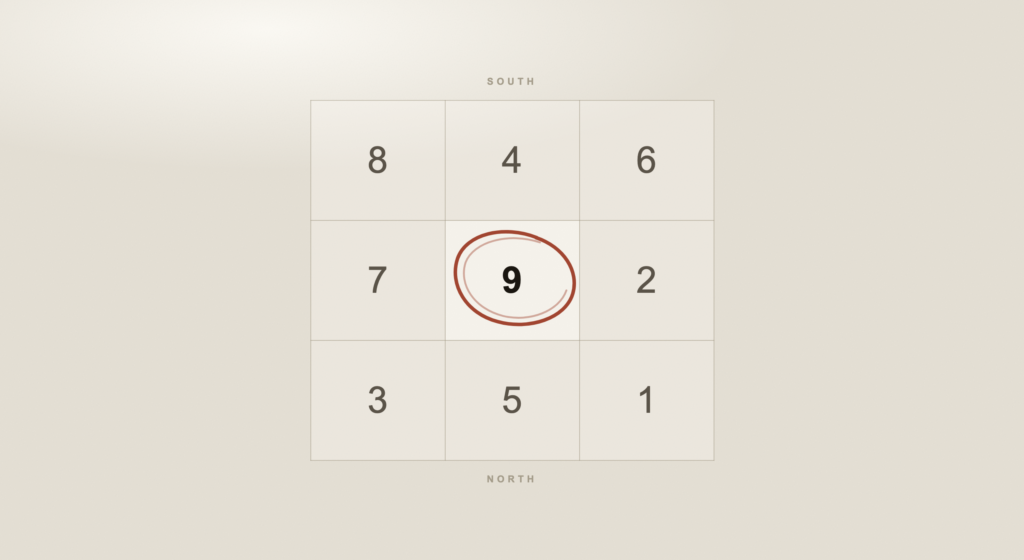
Flying Star Feng Shui calculates a chart for a building from its direction and period. Here is what Period 9
Article, BaZi, Channelling Kongming
A Rob Wealth year is usually read as a threat to defend against. Read more carefully, the warning inside it
Article, BaZi
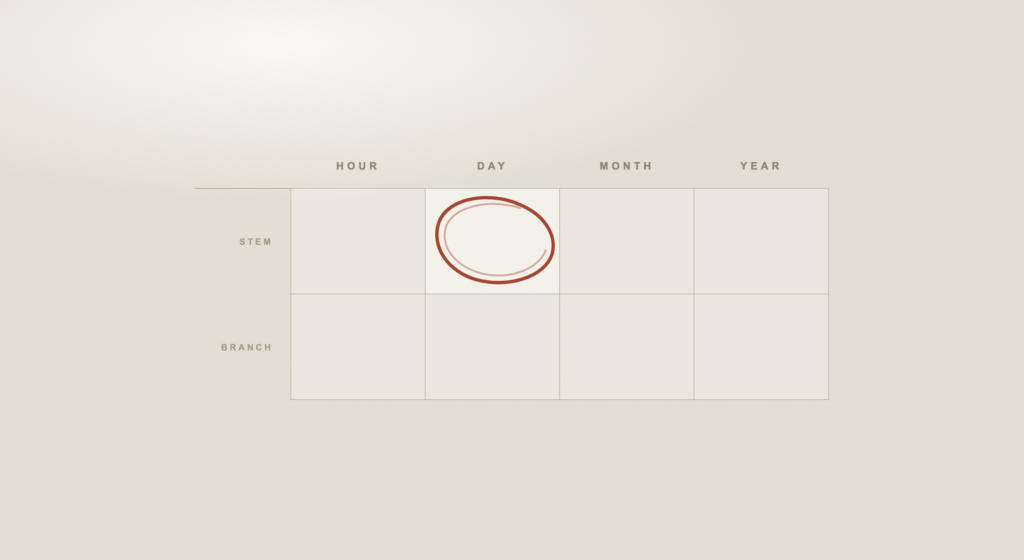
Your Day Master is the one character in a BaZi chart that represents you, out of ten possible types. Here
Article
The Tong Shu is the Chinese almanac used to select auspicious dates. It scores every day by its Day Officer,