There are two kinds of Feng Shui advice in the world. The first is classical Feng Shui, which deals with Qi, directions, time cycles, and how environments affect the people inside them. The second is lifestyle Feng Shui, which is basically Pinterest with incense sticks.
Guess which one you just read in that hotel-room survival guide?
Let’s take it point by point:
The first rule of hotel Feng Shui: if the Qi is bad, smother it with vanilla frosting perfume. Except here’s the problem. Qi doesn’t care about Yankee Candle’s spring collection. Candles can mask odors, sure, but that is air freshening, not Feng Shui. You don’t fix an MRI scan with deodorant.
This is not Feng Shui. This is nostalgia. You want to feel less lonely in a hotel room? Photos help. But Qi doesn’t suddenly realign because your aunt is smiling at you from a nightstand frame.
This is called having a spiritual practice. Good idea, but don’t drag Feng Shui into it. Reading scripture in a room changes your mindset, not the Qi field. If Feng Shui worked through motivational reading, Confucius would have published a self-help calendar.
Yes, because lugging a Buddha figurine through airport security will surely make the metal detector hum with good energy. Place it in the “northwest helpful people corner,” the article says. Helpful for who? The TSA agent who now thinks you’re running a roadside shrine?
Nothing says stealth traveler like banging a singing bowl in your hotel room at 10 p.m. Correlative Qi analysis? No. Annoyed neighbors? Yes. Sound can shift an atmosphere, but so can watching a movie.
Here we go again with the colour-by-numbers Feng Shui. A pink pillowcase isn’t going to summon romance, and a yellow one isn’t going to balance Earth Qi. You’ll just look like you have trust issues with hotel laundry.
Hotel décor is rarely great, but “balancing the five elements” by stuffing your suitcase with fire-coloured scarves is not classical Feng Shui. If interior design were the same as elemental Qi balance, IKEA would be a certified Feng Shui master.
Ah yes, the mystical art of tourist Feng Shui. Forget the Purple White scripts and directional charts. What you really need is a bag of local chips and a glossy postcard of the skyline. Problem solved.
Fresh flowers do brighten a room but calling them a Qi cure is like calling chocolate cake a cardiovascular treatment. Flowers die quickly, especially in hotel air conditioning. And nothing screams “wealth Qi” like dead tulips in a minibar glass.
Now let’s step away from the scented soap aisle and talk about how Feng Shui actually works in hotels.
Real Feng Shui operates on two levels.
First, the Forms approach. This is deductive reasoning. You don’t need to be a master to see which hotel has better Qi. Look at the surroundings. Is the hotel backed by a powerful landform mountain or simply a taller structure, giving support? Is the entrance open and inviting, with good Qi flow? Or is it wedged next to a freeway ramp, sucking energy away like a black hole of bad decisions? Choosing a hotel is half the battle. You do have a choice. Your money buys not just thread count but Qi quality. It’s easy to see which hotels have better land formations and which ones don’t. Why choose one that doesn’t have visually good landform Feng Shui?
Second, the Li Qi (Qi Principles) approach. This is the correlative method. Once you know your room number, you can apply Xuan Kong methods, Purple White scripts, Flying Stars, and other formulas to understand the Qi influences. A hotel room, like a house, has its own chart. The numbers reveal whether the room aligns with timely stars, whether it supports your endeavours, or whether it is basically a 3-star Airbnb for negative Qi
That’s the real work. Not pillowcases. Not scented candles. Certainly not postcards.
Reducing Feng Shui to “travel hacks” with trinkets and fragrances makes it look like superstition dressed in home décor. It turns a sophisticated system of Qi analysis into a lifestyle blog. The truth is that Feng Shui, when applied properly, doesn’t need props. It needs observation, alignment, and correlative analysis.
So, the next time someone tells you to pack a singing bowl for your hotel stay, smile politely. Then book the hotel with good external forms, check the room number against Li Qi methods, and rest easy knowing you are practicing real Feng Shui.
Candles optional.
Get Joey Yap’s latest insights and updates straight to your inbox.
Article, Feng Shui
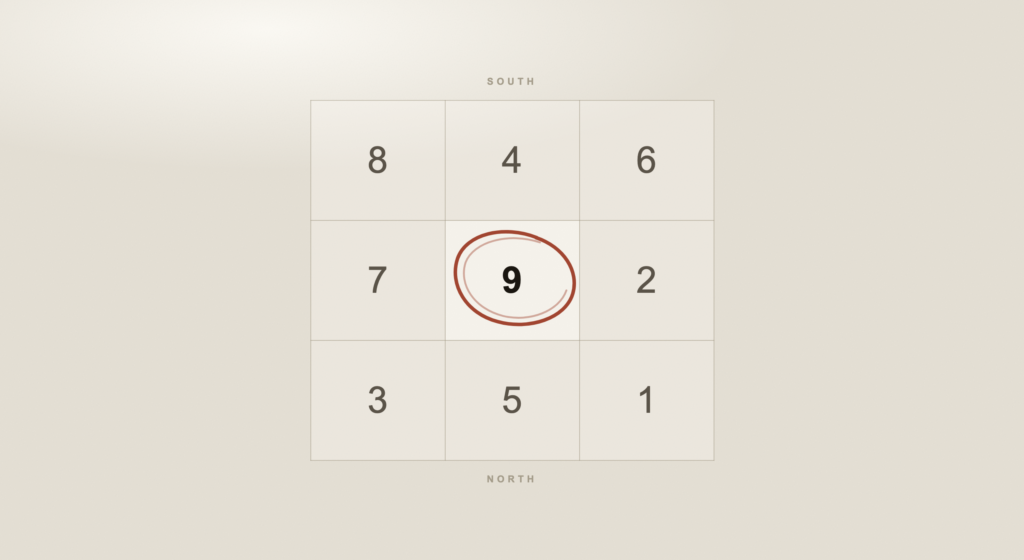
Flying Star Feng Shui calculates a chart for a building from its direction and period. Here is what Period 9
Article, BaZi, Channelling Kongming
A Rob Wealth year is usually read as a threat to defend against. Read more carefully, the warning inside it
Article, BaZi
Your Day Master is the one character in a BaZi chart that represents you, out of ten possible types. Here
Article
The Tong Shu is the Chinese almanac used to select auspicious dates. It scores every day by its Day Officer,