Let’s start with the biggest Feng Shui myth, one that Western “How to Feng Shui your bathroom” books can’t stop repeating; there’s something called the “Compass School” of Feng Shui.
Newsflash, there isn’t.
Yes, compasses exist. Yes, Feng Shui masters use them. But saying there’s a “Compass School” of Feng Shui is like saying there’s a “Calculator School” of accounting. Every accountant uses calculators. That doesn’t make it a school of thought. The correct term is Li Qi (理氣) which translates to “Principles of Qi”. Already you can tell it’s more profound than “Wave your compass around and hope for good luck.”.
Meanwhile, “Form School” isn’t really a school either. It’s shorthand for Luan Tou (巒頭), literally “Face of the Mountains”. This approach looks at the shapes and formations of the land; the mountains, rivers, valleys, the natural curves and flows of terrain, and asks; how does energy move through this place?
So, one approach looks at what’s visible and physical (Form), while the other works with what’s invisible and patterned (Li Qi). Together, they’re not rival gangs of Feng Shui but two complementary halves of a thinking system; one deductive and logical, the other correlative and associative.
And if you’re rolling your eyes at “associative thinking”, stay with me. Because this is where most modern misunderstandings about Feng Shui begin, and why a lot of people end up with green-painted bedrooms, dead fish in aquariums, and an enduring sense that Feng Shui is either magic or nonsense.
In the early days of Feng Shui, when compasses weren’t even invented yet, everything was about the land. You stood in front of a mountain, and instead of asking if it was a good hiking trail, you asked; how does this mountain look back at me? Its face, its posture, its connection to the river below, these told you whether Qi was gathering or dispersing.
This wasn’t hippie poetry. It was practical. A village built where Qi gathered, thrived. Crops grew, families flourished. A village built where Qi drained away, struggled, no matter how hard people worked.
This is Form School, observing what’s real and visible. Call it the MRI scan of Feng Shui. You can see the rivers, the hills, the valleys. You deduce how Qi flows by tracing the shapes of the environment.
Then came Li Qi, which asks: what about the Qi we can’t see? How do we map the invisible?
Enter the compass, not as a magic stick, but as a measuring tool. With direction, orientation, and time, Feng Shui masters correlated patterns: trigrams, numbers, cycles of Heaven and Earth. They built systems like Flying Star Feng Shui, which calculates how unseen Qi shifts in 20-year cycles and how it interacts with a building’s orientation.
Think of Li Qi as the blood test. You can’t see cholesterol by looking at someone, but numbers and correlations tell you what’s going on inside.
Form is tangible, Li Qi is intangible. Form is diagnostic, Li Qi is correlative. Together, they give a complete picture.
Relying on only one is like trying to diagnose an illness with only an X-ray or only a blood test. You’ll miss something critical.
And yet, many modern Feng Shui consultants don’t understand correlative thinking. They confuse correlation with causation. Which is why you’ll hear absurd claims like, “Your toilet in the Southwest is making your mother sick” or “Put a lucky cat at the door and money will pour in.”
This is where we need to slow down and talk about associative thinking, the engine that drives Li Qi.
Western logic is obsessed with cause and effect. If the toaster stops working, you assume it’s because someone jammed a fork in it, not because Mercury is in retrograde. One cause, one effect, case closed.
Chinese correlative thinking plays a different game. It’s less about forensic blame and more about resonance. How things echo and mirror each other across categories of life.
Think of music. A single note isn’t much, but strike a chord and suddenly the notes vibrate together, creating harmony (or dissonance). That’s correlative thinking; you’re not asking which string “caused” the sound, you’re asking how the sounds interact, how one amplifies or restrains the other.
In Feng Shui, the Five Elements work the same way. Wood isn’t just “trees.” It’s growth, expansion, springtime, the colour green, and even anger in human emotions. Wood fuels Fire, restrains Earth, is restrained by Metal. It’s a system of relationships, not a one-to-one cause effect chart.
The danger comes when people take correlations literally. They treat them like IKEA instructions; “Wood equals green, so let’s paint everything green and call it a cure.”. That’s how we end up with traumatized kids living in lime-coloured bedrooms or people believing a dead goldfish nobly sacrificed itself to absorb their bad luck.
Correlative thinking isn’t meant to be a paint-by-numbers guide to life. It’s about understanding patterns of resonance. When you reduce it to literal cause and effect, Feng Shui collapses into superstition.
These examples aren’t fringe, they’re the mainstream misunderstandings that give Feng Shui a bad name.
If we strip away the superstition, Feng Shui offers a remarkably sophisticated model for thinking about human life and environment.
Together, they are like Yin and Yang: the tangible and the intangible, the seen and unseen, deduction and association. One without the other is incomplete.
The tragedy is that modern practice often reduces it to cheap symbolism and bad interior design tips.
Here’s the thing, Feng Shui isn’t magic. It’s not superstition. It’s also not “science” in the Western lab-coat sense. It’s a system of thinking, one that combines deductive observation with associative resonance to help us make sense of where and how we live.
If you take the green rooms, dead fish or toilets causing family doom literally. You missed the point. If you throw it away as “nonsense”, you also missed the point.
The genius of Feng Shui lies in the in-between; a balance of what we can see and measure with what we can only correlate and infer. That’s where it stops being superstition and starts being useful.
So next time someone tells you their wealth is leaking out of the bathroom drain, don’t argue. Just smile, nod, and maybe suggest they clean the aquarium.
Get Joey Yap’s latest insights and updates straight to your inbox.
Article, Feng Shui
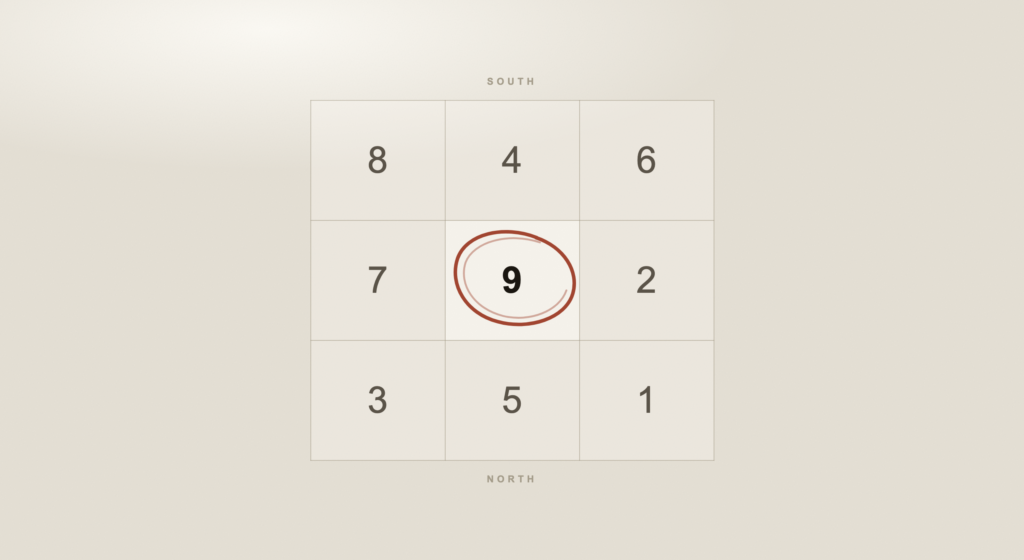
Flying Star Feng Shui calculates a chart for a building from its direction and period. Here is what Period 9
Article, BaZi, Channelling Kongming
A Rob Wealth year is usually read as a threat to defend against. Read more carefully, the warning inside it
Article, BaZi
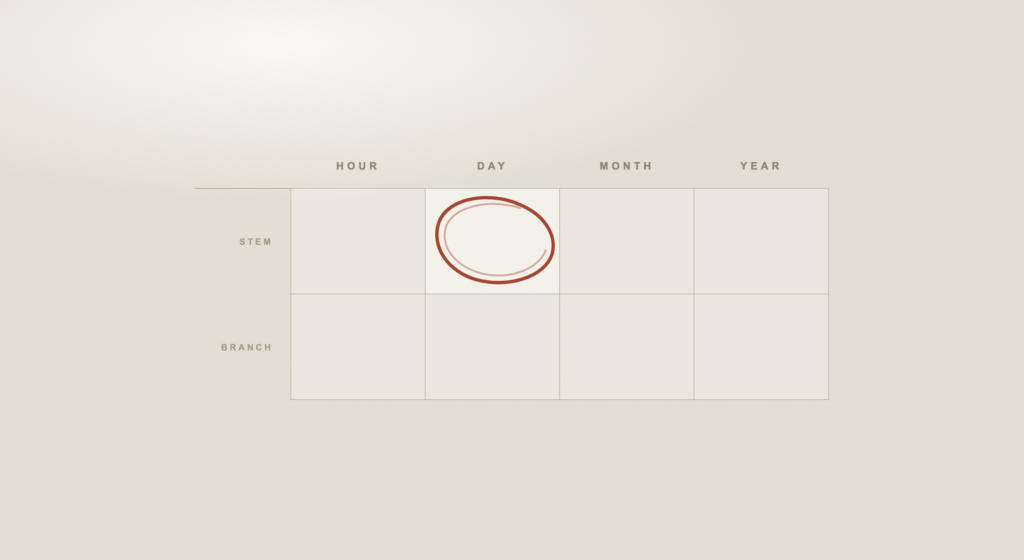
Your Day Master is the one character in a BaZi chart that represents you, out of ten possible types. Here
Article
The Tong Shu is the Chinese almanac used to select auspicious dates. It scores every day by its Day Officer,